Cute Owl Winter Cross Stitch Pattern PDF
The intersection of digital asset acquisition and physical craft execution requires a clear understanding of specifications, resource management, and workflow integration. The Cute Owl Winter Cross Stitch Pattern PDF serves as the central operational document for this specific creative project. It is not merely an image; it is a technical blueprint that dictates material procurement, time allocation, and final output quality. For hobbyists, freelancers, and small business owners looking to add handmade goods to their inventory or personal collections, understanding the structural details of this pattern is essential for efficient project completion.
This analysis breaks down the functional components of the pattern file, examining how its specific stitch count, thread requirements, and fabric compatibility influence the production process. By treating the cross-stitch pattern as a project management tool rather than just artistic inspiration, creators can minimize errors, optimize supply chain decisions, and ensure the final piece meets professional standards.
Technical Specifications and Resource Planning
Before any needle touches fabric, accurate data extraction from the PDF is required. The provided design operates on a fixed grid of 250 width by 250 height stitches, utilizing only full cross stitches. This uniformity simplifies the counting process but demands precise calculation regarding fabric size and thread volume. The decision to use exclusively full cross stitches removes the complexity of half-stitches or backstitches, streamlining the execution phase for intermediate to advanced stitchers.
The most critical variable in this workflow is the choice of fabric count, which directly correlates to the finished dimensions and the total number of threads required. The pattern provides calculated expectations for four common linen counts: 14, 16, 18, and 25. Selecting the wrong fabric count can result in a finished piece that is either too large for standard framing or too dense to stitch comfortably within a desired timeframe.
Fabric Compatibility and Dimensional Outcomes
The relationship between fabric count and finished size is inverse. A higher fabric count results in a smaller, tighter finish, while a lower count yields a larger, more open weave. Below is the breakdown of expected outcomes based on the 250x250 stitch grid:
- 14 Count Fabric: Produces the largest finished size at 17.9 inches (45.4 cm) wide and high. This option is ideal for statement wall art or large quilting inserts but requires significantly more floss and time.
- 16 Count Fabric: Offers a balanced medium size of 15.7 inches (39.7 cm). This is often considered the industry standard for framed gifts, providing good detail visibility without excessive bulk.
- 18 Count Fabric: Reduces the footprint to 13.9 inches (35.3 cm). This count is preferred for detailed work where finer definition is desired, though it increases the difficulty slightly due to the tighter weave.
- 25 Count Fabric: Creates a compact 10-inch (25.4 cm) square. This is suitable for miniature displays, ornaments, or jewelry pendants. Note that stitching at this count requires high-quality magnification tools and steady hands.
For entrepreneurs producing multiple units, consistency is key. Choosing one fabric count across a product line ensures that all finished pieces fit standard frame sizes, reducing waste and simplifying packaging logistics. The 14-count option, while visually striking, may require custom framing solutions, whereas the 16-count aligns with readily available retail frames.
Material Procurement and Thread Management
The pattern specifies the use of 55 DMC stranded cotton threads. This is a substantial quantity, indicating a colorful and detailed design. In a professional or semi-professional workflow, thread inventory management is often overlooked until the project is underway, leading to mid-project delays. The PDF includes a dedicated section detailing floss usage per color for 14-count fabric. While this reference is optimized for 14-count, it serves as a baseline estimate for other counts, requiring slight adjustments for higher counts (less thread needed) or lower counts (more thread needed).
When sourcing materials, consider the following efficiency tips:
- Pre-cutting Strategy: Given the high thread count, pre-cutting strands before starting can save significant time. However, this introduces the risk of tangling. Use a winder or bobbin system to organize colors sequentially.
- Bulk Purchasing: If planning to sell finished items, purchase DMC threads in bulk packs. This reduces per-unit cost and ensures color consistency across multiple batches, as dye lots can vary between individual skeins bought separately.
- Color Verification: Digital screens can distort color perception. Compare the symbol key against physical DMC cards under natural lighting conditions before committing to purchases. This prevents costly returns or mismatched aesthetics in the final product.
Workflow Integration and File Usability
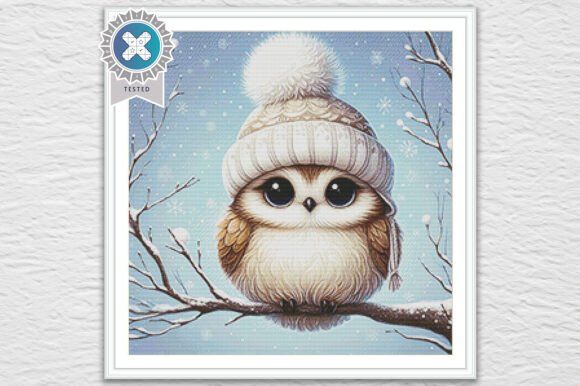
The delivered asset is a single PDF file containing four distinct components: a pattern mockup, a symbol key, floss usage statistics, and a black-and-white symbol chart. Each component serves a specific stage in the creative lifecycle.
Visualization and Client Approval
The pattern mockup is primarily a marketing and visualization tool. For freelancers or Etsy sellers, this image is crucial for listing creation. It demonstrates the potential end result, helping customers visualize the item in their home decor. Before purchasing or starting production, review the mockup to ensure the color palette aligns with your brand’s aesthetic or the client’s preferences.
Execution Reference
The symbol key and black-and-white symbol chart are the primary working documents. The black-and-white version is particularly valuable for printing. Printing in grayscale saves ink and reduces paper cost, especially for large patterns. Furthermore, some stitchers find that removing color distractions helps them focus on the geometric structure of the design, improving accuracy during long stitching sessions.
To integrate this into a daily routine, consider digitizing the workflow. Many modern stitchers use tablets or e-readers to view the pattern digitally. This eliminates the need for physical prints and allows for zooming in on complex sections. Ensure your device screen brightness is adjusted to avoid glare, and keep the PDF bookmarked at the relevant page for quick access.
Quality Control and Long-Term Storage
Consistency in tension and technique determines the longevity and appearance of the finished piece. With a design size of 250x250 stitches, maintaining even tension across the entire canvas is challenging. Inconsistent tension can lead to puckering or loose areas that collect dust over time.
Implement a quality control check at regular intervals. Every 50 stitches, step back and inspect the surface for uniformity. Check for skipped stitches or uneven pulls. If using 18-count or 25-count fabric, pay extra attention to the back of the work; neat backs are not just for aesthetics but prevent thread abrasion that could weaken the stitches over years of display.
For those treating this as a business asset, proper documentation of the process adds value. Keep notes on the actual thread usage compared to the estimated 55 strands. If you discover that certain colors require more length than predicted, update your internal database. This data refinement improves future cost estimates and profit margin calculations.
Strategic Application in Creative Projects
The Cute Owl Winter Cross Stitch Pattern PDF fits into broader workflows in several ways:
- Seasonal Product Launches: Winter-themed designs are highly marketable in Q4. Start the production process three months in advance to account for shipping times and holiday demand spikes.
- Skill Development: For educators or mentors teaching cross-stitch, this pattern offers a structured challenge. The exclusive use of full cross stitches makes it accessible, while the large stitch count teaches endurance and patience.
- Customization Opportunities: The mockup can serve as a base for custom orders. Clients may request specific fabric colors or framing styles. Having the technical specs allows you to quote accurately for these variations.
By approaching the Cute Owl Winter Cross Stitch Pattern PDF with a methodical mindset, you transform a simple craft activity into a managed project. The clarity of the included resources—the symbol key, usage stats, and mockup—reduces ambiguity and supports a smooth transition from digital file to physical object. Whether used for personal fulfillment, educational purposes, or commercial gain, adhering to the specified parameters ensures a high-quality outcome that honors the design’s intent.
Ultimately, the success of this project relies on preparation. Verify your fabric count early, order your DMC threads with buffer stock, and choose a viewing method that suits your ergonomic needs. With these logistical elements in place, the actual stitching becomes a focused, meditative process, resulting in a polished piece ready for display or distribution.