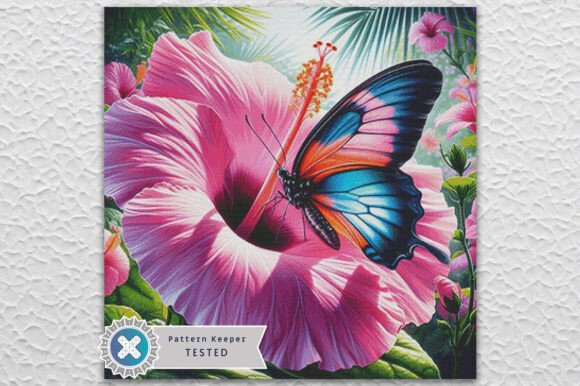
Hibiscus Butterfly Cross Stitch Pattern
The Hibiscus Butterfly Cross Stitch Pattern is not merely a set of instructions; it is a comprehensive digital package designed for advanced stitchers who are ready to tackle large-scale, intricate projects. At its core, this design merges the vibrant tropical aesthetic of hibiscus flowers with the delicate, organic lines of butterflies, creating a piece that serves as both a botanical study and an artistic statement. For those navigating the world of fiber arts, understanding the specific technical requirements and the versatility of this pattern is essential before committing to such a significant undertaking.
Unlike smaller, quick-finish designs often marketed toward casual crafters, this project demands a high level of preparation and endurance. The pattern is categorized as "Full Coverage," meaning every square on the fabric grid is filled with stitches. This characteristic significantly impacts the finished texture, durability, and visual impact of the final piece. It transforms the work from a simple decoration into a substantial textile art object, suitable for framing or display in professional settings. Understanding these nuances helps different audiences—from hobbyists to commercial creators—evaluate whether this specific pattern aligns with their current skill set and project goals.
Technical Specifications and Scale Considerations
One of the most defining features of the Hibiscus Butterfly Cross Stitch Pattern is its scale. The design measures 350 by 350 stitches, which translates to a substantial physical size depending on the fabric count chosen. For instance, when stitched on 14-count Aida cloth, the finished dimensions reach approximately 25 inches by 25 inches (63.5 cm by 63.5 cm). This is a large canvas that requires careful planning regarding hoop size, frame availability, and workspace organization.
- Thread Complexity: The pattern utilizes 109 DMC colors. While this may seem daunting, the use of standard DMC floss ensures accessibility, as these threads are widely available globally. However, managing over 100 distinct shades requires a robust organizational system, such as color-coded thread organizers or digital tracking apps.
- Fabric Versatility: The pattern provides calculated dimensions for multiple fabric counts, including 14, 16, 18, and even 25 count. Choosing a higher count, such as 25 count, reduces the finished size to roughly 14 inches by 14 inches but increases the precision required, making it ideal for fine detail work. Conversely, 14 count offers a more traditional, bold look that is easier on the eyes during long stitching sessions.
For beginners, the sheer volume of stitches might be intimidating. However, for experienced stitchers, this complexity is where the value lies. The full coverage nature means there are no awkward gaps or sparse areas; the result is a dense, rich tapestry that holds up well to handling and display. This makes the pattern particularly appealing to those looking to create heirloom-quality pieces or gallery-worthy art.
Digital Deliverables and Workflow Efficiency
In the modern crafting landscape, the format of the pattern is just as important as the design itself. The Hibiscus Butterfly Cross Stitch Pattern is delivered as two distinct PDF files, optimized for various workflows. One file contains the symbol key and floss usage guide, while the other includes the black and white symbol chart. This separation allows users to print only what they need, saving ink and paper—a practical consideration for both home crafters and small business owners who manage printing budgets.
The inclusion of a Project Tracker within the PDFs adds a layer of utility that appeals to professionals and organized hobbyists alike. Tracking progress on a 350x350 stitch project can feel overwhelming without a clear metric. The tracker allows users to mark off completed sections, helping to maintain momentum and providing a sense of accomplishment throughout the lengthy process. Furthermore, compatibility with apps like Pattern Keeper or Markup R-XP caters to the tech-savvy demographic. These tools allow stitchers to annotate their charts digitally, hide symbols they have completed, and zoom in on specific details without straining their eyes. This flexibility is crucial for maintaining accuracy and reducing fatigue during long stitching marathons.
Evaluating the Pattern Across Different Audiences
The relevance of the Hibiscus Butterfly Cross Stitch Pattern shifts depending on who is holding the needle. Here is how different groups might approach this project:
Hobbyists and Leisure Crafters
For the dedicated hobbyist, this pattern represents a challenging yet rewarding milestone. The tropical theme of hibiscus and butterflies offers a cheerful, uplifting aesthetic that can brighten any room. Hobbyists often prioritize ease of use and enjoyment. The clear symbol chart and the option to use digital apps make the learning curve manageable, even for those new to full-coverage designs. The ability to choose a lower fabric count (like 14 count) allows for a faster pace, making it possible to complete the project within a few months rather than years.
Professional Artists and Educators
Art educators and fiber artists may view this pattern as a case study in color theory and composition. The use of 109 colors provides an opportunity to teach students about blending, shading, and gradient transitions. The natural motifs—the hibiscus and the butterfly—serve as excellent subjects for discussing organic shapes and symmetry. Professionals might also appreciate the high-resolution digital files for projecting onto fabric for teaching demonstrations. The technical precision required for 25-count fabric can be used to demonstrate advanced techniques in tension control and needle placement.
Small Business Owners and Creators
While this is a personal use pattern, small business owners in the crafting niche can leverage the data associated with it. Analyzing trends around "full coverage" and "advanced cross stitch" can inform inventory decisions for thread shops or fabric retailers. Additionally, bloggers and content creators can produce tutorials based on the unique challenges of this pattern, such as managing 100+ thread colors or setting up a large-scale stitching station. The pattern’s complexity offers rich material for SEO-friendly content, attracting readers looking for detailed guides on advanced techniques.
Priorities: Quality, Flexibility, and Long-Term Value
When evaluating the Hibiscus Butterfly Cross Stitch Pattern, several priorities come into play. Quality is paramount; the clarity of the symbols and the accuracy of the color counts directly affect the final outcome. A blurry or incorrect chart can lead to hours of frustration and wasted materials. The provided PDFs are designed to be crisp and legible, ensuring that stitchers can rely on them for accurate execution.
Flexibility is another key factor. By offering dimensions for four different fabric counts, the pattern accommodates various preferences and resource constraints. Some stitchers may prefer the speed of 14-count fabric, while others may desire the finesse of 18 or 25 count. This adaptability ensures that the pattern remains relevant regardless of the stitcher’s current equipment or desired finish.
Long-term usefulness is inherent in the design itself. A full-coverage, large-scale piece of art is not a disposable item. It is a lasting addition to a home or collection. For consumers, this represents a good investment of time and money, as the finished product has enduring aesthetic value. Unlike trendy, small items that may fall out of fashion, the classic combination of flora and fauna ensures the piece remains timeless.
Practical Examples and Decision Making
Consider Sarah, a freelance graphic designer who enjoys cross-stitching as a way to disconnect from screens. She chooses the 16-count fabric version to balance detail with comfort. Using the Pattern Keeper app, she digitizes her progress, allowing her to stitch during commutes or breaks without losing her place. The clear symbol key helps her navigate the complex color transitions, turning a potentially stressful project into a meditative practice.
On the other hand, consider Mark, a teacher introducing advanced textile arts to his senior class. He selects the 14-count version for its visibility and durability. He uses the black and white chart for projection, guiding students through the initial layers of the hibiscus petals. The project tracker becomes a classroom management tool, helping students set weekly goals and stay motivated. The collaborative nature of the large design encourages peer support and shared problem-solving.
Ultimately, the decision to undertake the Hibiscus Butterfly Cross Stitch Pattern depends on an honest assessment of one’s skills, resources, and goals. It is not a pattern for the faint of heart, but for those who embrace challenge, it offers a profound sense of achievement. The combination of technical precision, artistic beauty, and flexible delivery methods makes it a standout choice for serious stitchers looking to elevate their craft.