Mastering the Flounce Sleeves Wrap Top PDF Pattern: A Comprehensive Guide to Digital Sewing Success
The landscape of independent fashion design has undergone a radical transformation in recent years, driven largely by the accessibility of digital tools and instant-download resources. At the heart of this revolution is the Flounce Sleeves Wrap Top PDF Pattern, a versatile sewing resource that bridges the gap between amateur hobbyists and professional garment constructors. Unlike traditional commercial patterns that require physical shipping and often come with rigid sizing constraints, modern digital patterns offer immediate access, precise engineering, and adaptable formats for various printing methods. This article explores the technical specifications, practical applications, and strategic advantages of utilizing this specific pattern file set, providing a thorough analysis for sewers looking to expand their wardrobe or product line.
Understanding the Digital Pattern Ecosystem
Before diving into the specific features of the Flounce Sleeves Wrap Top PDF Pattern, it is essential to understand the medium through which it is delivered. The shift from paper-based drafting to portable document format (PDF) has democratized pattern making. However, not all PDF patterns are created equal. The value proposition of any digital sewing pattern lies in its versatility across different hardware setups. The inclusion of multiple printer sizes in this download ensures that users with varying levels of investment in printing technology can achieve accurate results without additional cost or effort.
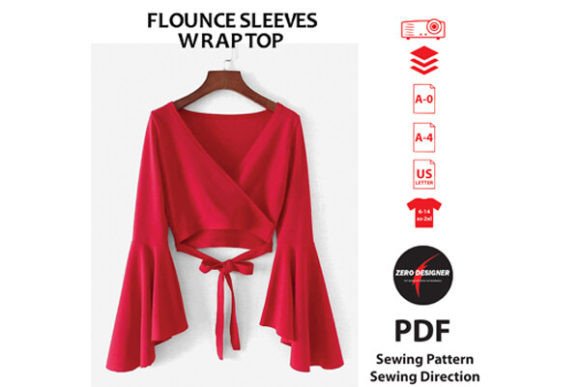
The core strength of this pattern package is its multi-format approach. By providing files tailored for home printers, large-format print shops, and projector systems, the creator has addressed the three primary barriers to entry for home sewers: equipment availability, printing costs, and assembly time. This flexibility allows the user to choose the method that best suits their current resources, ensuring that the final garment matches the designer’s intended silhouette regardless of how the pattern pieces were produced.
Technical Breakdown of Included File Formats
The Flounce Sleeves Wrap Top PDF Pattern is structured to accommodate distinct workflow preferences. Understanding the nuances of each included file type is crucial for achieving a professional finish. Below is a detailed examination of the four distinct components included in the instant download.
A4 and US Letter Home Printer Files
The most common method for accessing digital patterns involves printing on standard office equipment. This package includes two variations of this format:
- A4 Pattern Files (19 Pages): Designed primarily for international markets where A4 is the standard paper size. These 19 pages contain the full suite of pattern pieces, meticulously scaled to fit together using the standard grid system found on most cutting mats.
- US Letter Pattern Files (19 Pages): Tailored for users in North America and other regions utilizing Letter-sized paper. Like the A4 version, these 19 pages provide complete coverage of the pattern, ensuring that no piece is omitted due to regional paper differences.
For both formats, the user must adhere to strict calibration protocols. Printing at 100% scale (not "fit to page") and verifying the test square is mandatory. The layered nature of these files allows users to toggle between sizes digitally before printing, reducing waste by allowing them to print only the size they intend to sew, provided their printer supports duplexing or manual page management.
A0 Large Format Printable PDF
For those who wish to avoid the tedium of tiling and taping dozens of small sheets together, the A0 Printable Pdf file offers a streamlined solution. This single-page file is designed for professional print shops equipped with wide-format plotters. While this option typically incurs a higher per-unit cost than home printing, it eliminates the risk of misalignment errors inherent in manual assembly. It is ideal for users who prioritize precision over speed and have access to local copy centers or specialized textile printing services.
Layered Projector Pattern File
The LAYERED Pattern file represents the cutting edge of home sewing technology. This single-page file is specifically engineered for use with overhead projectors or specialized wide-range printers used in conjunction with projection mapping software. The layering feature is critical; it allows the sewer to display only the lines corresponding to their specific size, hiding overlapping lines from other sizes. This clarity reduces visual clutter and minimizes tracing errors when projecting onto fabric directly. This format is particularly advantageous for advanced hobbyists and small-batch manufacturers who invest in projector systems to save on paper and ink costs.
Instructional Framework and Visual Guidance
A pattern is only as good as the instructions that accompany it. The Flounce Sleeves Wrap Top PDF Pattern distinguishes itself through a robust instructional component consisting of 05 pages of Step-by-Step Sewing Directions Instructions with images. In the realm of complex garments, such as a wrap top with flounce sleeves, textual instructions alone are often insufficient. The inclusion of visual aids serves several pedagogical functions:
- Clarification of Complex Seams: Flounce sleeves involve gathering, easing, and attaching curved edges to straight seams. Images demonstrate the exact placement of pins and the direction of stitching, preventing common mistakes like twisted sleeves or uneven hems.
- Construction Sequence: The step-by-step layout ensures that the sewer follows the logical order of operations. For a wrap top, understanding whether to construct the bodice before or after attaching the sleeves is vital for structural integrity.
- Finishing Techniques: High-quality images guide the user through hemming, casing creation for elastic (if applicable), and closure mechanisms, ensuring the interior of the garment looks as polished as the exterior.
Practical Applications and Use Cases
The versatility of the Flounce Sleeves Wrap Top PDF Pattern extends beyond simple personal wear. Its design characteristics make it suitable for a variety of professional and creative applications.
Wardrobe Building for Fashion Enthusiasts
For the DIY fashionista, this pattern offers a high-impact look with manageable construction complexity. The wrap style is universally flattering, accommodating a wide range of body types without extensive alterations. The flounce sleeves add a dramatic, feminine touch that elevates basic fabrics like cotton lawn or rayon challis into evening-appropriate attire. Users can experiment with prints, solids, and textures to create unique pieces that reflect personal style, avoiding the homogeneity of mass-produced retail clothing.
Small Business and Entrepreneurial Ventures
Aspiring boutique owners and Etsy sellers find significant value in this digital asset. The ability to instantly acquire the pattern allows for rapid prototyping. Entrepreneurs can produce small batches to test market demand before committing to larger production runs. The availability of the A0 file facilitates efficient copying for bulk production if a local print shop is utilized. Furthermore, the clear instructions reduce the learning curve for hired seamstresses, ensuring consistency across manufactured units.
Educational and Workshop Settings
Educators teaching garment construction can utilize this pattern as a case study for intermediate-level students. The combination of different sleeve attachments and wrap closures provides ample opportunity to teach skills such as bias binding, facing application, and grainline alignment. The digital nature of the pattern allows instructors to share files electronically with students, streamlining the distribution process in remote or hybrid learning environments.
Strategic Considerations for Implementation
To maximize the utility of the Flounce Sleeves Wrap Top PDF Pattern, users should consider several logistical factors prior to beginning their project.
Material Selection
The success of the flounce sleeve design is heavily dependent on fabric choice. Lightweight to medium-weight fabrics with good drape are recommended. Stiff fabrics may cause the flounces to stand away from the arm unnaturally, while extremely slippery silks may require stabilizers during construction. Natural fibers like linen blends or viscose often yield the best results, offering movement and comfort.
Calibration and Testing
Regardless of the printing method chosen, testing the pattern is non-negotiable. For home printers, sewing a muslin or toile in cheap cotton is advised to check the fit and sleeve volume. For projector users, projecting onto scrap fabric or paper first ensures that the scaling is correct and that the image is sharp enough to trace accurately. Neglecting this step can lead to wasted fabric and frustration.
File Management
Organizing the downloaded files is crucial. Users should create a dedicated folder structure that separates the A4, US Letter, A0, and Layered files. Keeping the instruction manual easily accessible alongside the relevant pattern file will streamline the workflow. Additionally, backing up these files to cloud storage ensures that the pattern is available for future reference or replication.
Conclusion
The Flounce Sleeves Wrap Top PDF Pattern exemplifies the efficiency and adaptability of modern digital sewing resources. By providing a comprehensive suite of file formats—from standard home printer outputs to advanced projector layers—it removes technical barriers and empowers a broad audience of creators. The inclusion of detailed, image-rich instructions further enhances its usability, making it a valuable tool for both novice enthusiasts and seasoned professionals. Whether used for personal wardrobe enhancement, small business production, or educational purposes, this pattern offers a reliable pathway to creating a stylish, well-fitted garment. As the sewing community continues to embrace digital innovation, resources like this underscore the importance of accessibility, precision, and user-centric design in contemporary pattern making.