Water Drops
In the landscape of digital typography, most designers gravitate toward familiar sans-serifs or classic serifs when building a visual hierarchy. These typefaces serve their purpose with reliability and neutrality. However, there are moments when a project demands more than just legibility; it requires an immediate emotional cue or a distinct aesthetic signature. This is where decorative elements, often categorized as dingbats or glyphs, step in to fill the gap between pure text and illustration. Water Drops is one such resource, a font that abandons traditional alphanumeric characters in favor of stylized representations of liquid forms. It is not a tool for writing paragraphs, but it can be a powerful accent for specific design contexts.
Understanding the Concept Behind Water Drops
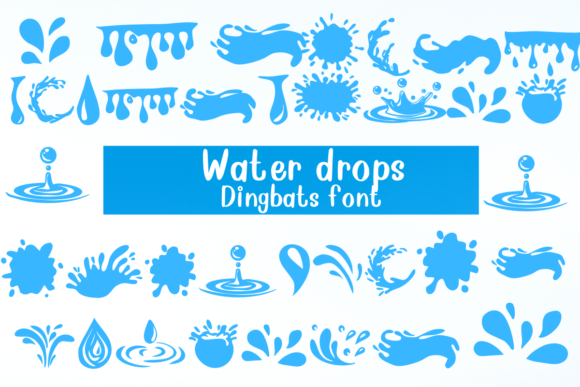
To evaluate Water Drops, one must first understand its fundamental nature. Unlike standard fonts that map keys to letters, this typeface maps inputs to small, illustrative icons resembling water droplets. These shapes vary in size, orientation, and internal pattern. Some may appear as simple teardrops, while others might feature highlights, ripples, or geometric segmentation within the drop shape. The result is a set of visual punctuation marks that convey themes of fluidity, cleanliness, freshness, or nature without using words.
This approach aligns with the broader category of decorative fonts used in graphic design. Historically, dingbat fonts have been used to add texture and interest to layouts where space is limited or where a subtle thematic hint is needed. Water Drops fits into this lineage but focuses exclusively on a single motif. For creators working in sectors like wellness, environmental services, or culinary arts, this specificity can be a significant advantage. It allows for instant brand association through typography alone, provided the usage is restrained and intentional.
Key Characteristics and Visual Appeal
The primary strength of Water Drops lies in its versatility as a graphical element rather than a linguistic one. Because the "characters" are images, they can be scaled, colored, and rotated independently of any baseline text. This flexibility offers several practical benefits:
- Visual Rhythm: When placed alongside body text, the varying sizes of the drops can create a pleasing rhythm. They break up large blocks of white space and guide the eye across a layout.
- Thematic Consistency: For projects related to hydration, cleaning products, or eco-friendly initiatives, these glyphs reinforce the message subconsciously. A poster for a yoga retreat or a label for organic soap gains immediate context from these symbols.
- Aesthetic Softness: Unlike sharp geometric icons or rigid bullet points, the organic curves of water drops soften the overall look of a design. This makes them particularly effective for brands aiming for a gentle, approachable, or natural persona.
However, the effectiveness of these characteristics depends heavily on execution. If the drops are too large relative to the accompanying text, they can overwhelm the content. Conversely, if they are too small, they lose their decorative impact and become mere clutter. The designer must carefully balance scale and density to ensure the font enhances rather than distracts from the core message.
Practical Applications in Design Projects
While Water Drops cannot replace standard typefaces for reading material, it excels in supplementary roles. Here are some realistic scenarios where this font adds tangible value:
Invitations and Event Materials
For weddings, spa days, or summer festivals, Water Drops can serve as elegant separators or bullet points. Instead of standard dashes or dots, a sequence of droplet glyphs can underline headings or frame quotes. This adds a layer of polish and thematic relevance that generic bullets cannot achieve. For example, an invitation for a beach-themed party could use larger, scattered drops to simulate a shoreline effect.
Social Media Graphics
In the fast-paced environment of social media, visual differentiation is key. Instagram posts or Pinterest pins often rely on bold graphics and minimal text. Using Water Drops as part of a collage or as accents around a central image can draw attention. Marketers selling skincare products or bottled water can use these glyphs to highlight features like "hydrating," "pure," or "refreshing" without adding extra words.
Educational and Infographic Elements
Educators and content creators designing infographics can use the font to represent data points or steps in a process. A series of descending droplet sizes could visually indicate a decrease in volume or intensity. In children’s educational materials about weather or science, these glyphs provide a friendly, recognizable iconography that aids comprehension.
Evaluating Usability and Workflow Integration
From a technical standpoint, integrating Water Drops into a workflow is straightforward. Like most modern font files, it installs easily on operating systems and integrates with major design software such as Adobe Illustrator, Photoshop, Canva, and Microsoft Word. However, usability issues can arise if the font is not handled with care.
One common pitfall is treating the glyphs as if they were regular text. Since they lack ascenders and descenders in the traditional sense, aligning them with baseline text can sometimes look off-center. Designers should manually adjust vertical alignment to ensure the visual weight of the drops matches the surrounding letters. Additionally, because the font consists of illustrations, color customization is essential. Default black drops may not fit every background. Most design tools allow users to recolor the glyphs, enabling seamless integration with brand palettes.
Another consideration is file format compatibility. While standard OTF or TTF files work well in vector-based programs, rasterizing the text for web use requires careful attention to resolution. Low-resolution exports can make the delicate details of the drops appear jagged or blurry, undermining the professional quality of the design. Always export at high DPI for print and use SVG or PNG with transparency for web applications.
Potential Limitations and Best Practices
No creative asset is perfect, and Water Drops has clear limitations that designers must respect. First and foremost, it is not suitable for long-form content. Attempting to write sentences using only these glyphs would result in confusion and frustration for the reader. Its role is strictly decorative or symbolic.
Secondly, overuse can lead to visual fatigue. If every heading or bullet point is adorned with a droplet, the design loses its impact. The font works best when used sparingly as an accent. Think of it as salt in cooking: a little enhances the flavor, but too much ruins the dish.
Furthermore, cultural and contextual sensitivity matters. While water is generally positive, in certain contexts, excessive water imagery might imply wetness, mess, or danger (e.g., flood warnings). Designers should assess the tone of their project before applying these glyphs. For a cleaning product, they suggest purity; for a construction site safety notice, they might seem inappropriate.
Who Should Consider Water Drops?
This font is particularly useful for freelancers and small business owners who need quick, effective design solutions without extensive graphic resources. Bloggers covering lifestyle topics, entrepreneurs launching eco-brands, and educators creating engaging worksheets will find Water Drops to be a cost-effective addition to their toolkit. It provides a professional touch that elevates basic templates into customized designs.
For professional agencies, it may serve as a niche asset for specific client campaigns rather than a staple in their library. It is not a replacement for a comprehensive font pack but a specialized tool for specific thematic needs. Agencies should test it in mockups to ensure it aligns with their clients' brand guidelines before committing to its use.
Final Thoughts on Value and Longevity
The long-term value of Water Drops depends on the enduring relevance of its theme. As long as designs continue to emphasize nature, health, and clarity, this font will remain relevant. Trends in graphic design often cycle back to organic shapes and hand-drawn aesthetics, suggesting that decorative fonts like this one will continue to have a place in the designer’s arsenal.
Ultimately, Water Drops is a fun and creative dingbat font that offers unique opportunities for visual storytelling. By understanding its strengths as a decorative element and respecting its limitations as a non-linguistic tool, designers can leverage it to create projects that are both cool and unique. Whether decorating invitations, enhancing posters, or adding flair to social media posts, it provides a simple yet effective way to inject personality into digital and print media. The key is restraint, intentionality, and a clear understanding of the audience’s expectations.