Mastering the Beaded Wasp: A Comprehensive Guide to Brick Stitch Insect Jewelry Patterns
The intersection of nature-inspired artistry and intricate beadwork has long captivated hobbyists and professional designers alike. Among the myriad of insect motifs available in the world of fiber arts, the Beaded Wasp stands out as a striking example of geometric precision meeting organic form. This specific design, often found as a digital download, offers creators a unique opportunity to transform simple glass seed beads into lifelike, wearable art. Whether you are looking to create a statement pendant, a delicate brooch, or functional accessories like bag charms, understanding the underlying structure of this pattern is key to achieving a polished result.
This guide explores the technical specifications, creative applications, and practical considerations of working with the Beaded Wasp brick stitch pattern. By delving into the specifics of the Miyuki Delica 11/0 beads and the dual-stitch versatility of the design, we aim to provide a thorough resource for beaders of varying skill levels who wish to incorporate this dynamic motif into their collections.
Understanding the Technical Foundation: Brick and Peyote Stitch
At the heart of the Beaded Wasp design lies a fundamental technique known as the brick stitch. This method involves weaving beads together in an offset manner, resembling the layout of bricks in a wall. The resulting fabric is flexible yet sturdy, allowing for the creation of three-dimensional shapes that hold their form well. For those familiar with bead weaving, the brick stitch is prized for its ability to create smooth curves and sharp angles simultaneously, making it ideal for representing the segmented body and wings of an insect.
One of the most advantageous features of this particular pattern is its structural flexibility. While primarily designed for the brick stitch, the geometry of the Beaded Wasp allows it to be rotated 90 degrees to be woven using the peyote stitch. This adaptability opens up new possibilities for texture and tension control. Peyote stitch, which creates a tighter, more uniform fabric, might offer a different aesthetic finish compared to the slightly looser, more textured look of the brick stitch. Understanding how to translate between these two techniques can significantly expand your creative toolkit, allowing you to experiment with how light interacts with the bead surfaces depending on the weave chosen.
The Role of Miyuki Delica 11/0 Beads
The choice of materials is just as critical as the stitching technique. The Beaded Wasp pattern specifies the use of Miyuki Delica 11/0 beads. These cylindrical seed beads are renowned for their uniformity and precise sizing. Unlike traditional round seed beads, Delicas have a tube-like shape that allows them to sit flush against one another, creating a smooth, almost ceramic-like surface when woven correctly. This characteristic is particularly important for a detailed subject like a wasp, where distinct color blocking and clear definition between the yellow and black segments are necessary to capture the insect’s essence.
The 11/0 size strikes a perfect balance between detail and manageability. Smaller beads (like 15/0) would require excessive time and magnification, potentially leading to eye strain and frustration for the creator. Larger beads (like 8/0) might lack the resolution needed to depict the subtle nuances of the wasp’s anatomy. The 11/0 Delica provides enough surface area to apply multiple colors while remaining small enough to produce a piece that feels substantial yet elegant.
From Digital File to Physical Art: What You Receive
Purchasing a digital beading pattern is a convenient way to access complex designs without the overhead of physical shipping. However, understanding exactly what is included in the download package helps set realistic expectations for the crafting process. When you acquire the Beaded Wasp pattern, you receive a ZIP archive containing two distinct file types: a PDF document and a BTP file. Each serves a specific purpose in the workflow of creating the jewelry piece.
The PDF Pattern Guide
The PDF file acts as the primary instruction manual for the project. It is not merely a visual representation but a comprehensive data sheet that includes:
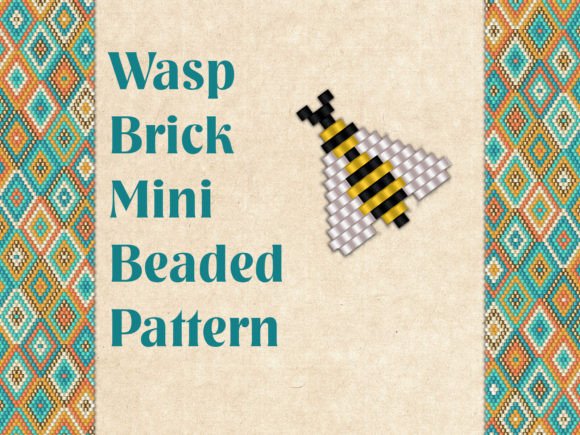
- Dimensions and Scale: Clear indications of the final size in both millimeters and inches. For the Beaded Wasp, the finished piece measures approximately 20.12 x 20.25 mm (0.79 x 0.79 inches). Knowing the exact dimensions helps you determine if the piece will work as a standalone pendant, a component in a larger necklace, or a charm for a zipper pull.
- Grid Specifications: The pattern consists of 11 columns and 15 rows. This grid structure is essential for counting beads accurately as you weave row by row.
- Color Palette and Quantity: A detailed list of the bead types, specific colors required, and the total quantity needed. This ensures you purchase the correct amount of material beforehand, avoiding mid-project shortages.
- Detailed Graph: A large, numbered graph of the pattern. This visual map allows you to track your progress visually, ensuring that each bead is placed in the correct sequence to achieve the intended color flow and shape.
The BTP File for Customization
For advanced users or those who wish to personalize the design, the inclusion of a BTP (BeadTool Project) file is a significant value-add. BeadTool4 is a popular software program used by beaders to visualize patterns and adjust color schemes before committing to thread and needle. By opening the BTP file, you can:
- Experiment with Color Combinations: If you prefer a metallic gold and black wasp instead of the standard yellow and black, you can easily swap the shades within the software to see how the contrast affects the overall look.
- Modify the Design: You can add or remove beads to alter the size or shape of the wasp. Perhaps you want a longer abdomen or broader wings; the digital format allows for these tweaks without wasting physical materials during the trial phase.
- Print Custom Charts: Once you have customized the design, you can generate a new printout that matches your specific color choices, ensuring accuracy during the weaving process.
Practical Applications and Creative Uses
While the Beaded Wasp is undeniably beautiful as a standalone piece, its versatility extends far beyond a simple pendant. The compact size and durable construction make it an excellent candidate for various accessory applications. Here are several ways creators are incorporating this design into their projects.
Jewelry Components
The most obvious application is jewelry. The Beaded Wasp can serve as the focal point of a necklace, suspended from a chain or leather cord. Its rigid structure means it does not require heavy backing or wire wrapping to maintain its shape, allowing for minimalist settings that let the beadwork shine. Additionally, because the pattern is symmetrical along its vertical axis, it works exceptionally well as a pair of earrings. Creating two mirrored wasps and attaching them to earring hooks results in a cohesive and striking set.
Brooches and Pins
For those interested in wearable art, sewing a pin back onto the reverse side of the Beaded Wasp transforms it into a brooch. This is particularly effective when attached to lapels, scarves, or hats. The vibrant colors of the wasp can add a pop of interest to neutral-toned clothing, serving as a conversation starter. The durability of the brick stitch ensures that the piece can withstand daily wear without losing its structural integrity.
Bag Charms and Keychains
In recent years, personalized bag charms have become a major trend in fashion. The Beaded Wasp, with its distinct shape and recognizable subject matter, makes a perfect charm for handbags, backpacks, or laptop sleeves. Attaching a lobster clasp or jump ring to the top of the wasp allows it to dangle freely, adding movement and texture to everyday carry items. Similarly, it can be incorporated into keychain designs, offering a unique alternative to mass-produced plastic or metal keys.
Crochet Markers and Functional Accessories
Interestingly, the utility of the Beaded Wasp extends into other craft communities. Knitters and crocheters often use decorative markers to keep track of stitches in circular knitting. The small, flat profile of the Beaded Wasp makes it an ideal marker that is easy to slide onto needles and visible enough to spot at a glance. Beyond knitting, these miniature creations can be used as bookmarks, hair clips, or even embellishments on gift tags, demonstrating the wide-ranging appeal of such a versatile pattern.
Considerations for Success
Before beginning the Beaded Wasp project, there are several important factors to consider to ensure a successful outcome. First and foremost, it is crucial to recognize that this is a pattern only, not a step-by-step instructional guide. It assumes a baseline level of proficiency in bead weaving. If you are new to the brick stitch or peyote stitch, it is advisable to practice with simpler geometric shapes first. Attempting a complex insect design without understanding the fundamentals of tension, threading, and bead placement can lead to frustration and uneven results.
Tension and Technique
Maintaining consistent tension is vital in brick stitch work. If the thread is too tight, the fabric will pucker and lose its natural drape. If it is too loose, the beads may shift, causing gaps and distorting the shape of the wasp. Regularly checking your work against the graph and ensuring that the beads sit snugly but comfortably against each other will help achieve a professional finish.
Color Accuracy
Another consideration is the variability of digital displays. The preview colors shown in the pattern description or online listing may vary on different monitors due to calibration differences. To mitigate this, it is recommended to refer to the actual bead suppliers’ color charts rather than relying solely on screen images. This ensures that the colors you purchase match your vision for the final piece.
Time Management
Finally, be prepared for the time investment required. Weaving a 11x15 grid of Miyuki Delicas, while not excessively large, requires patience and focus. The repetitive nature of the stitch can be meditative, but it also demands sustained attention to detail. Setting aside dedicated blocks of uninterrupted time can help maintain consistency and reduce errors.
Conclusion
The Beaded Wasp represents a harmonious blend of artistic expression and technical skill. By leveraging the precision of Miyuki Delica 11/0 beads and the flexibility of brick and peyote stitch techniques, creators can produce stunning, durable pieces of wearable art. Whether used as a centerpiece in a jewelry collection, a charming accessory for bags, or a functional tool for knitters, this pattern offers endless possibilities for customization and creativity. With the right tools, a clear understanding of the techniques involved, and a willingness to experiment, anyone can bring this intricate insect to life through the medium of beadwork.